5 min to read
Lean Canvas (v.1.0)
Development Note for Project Prism
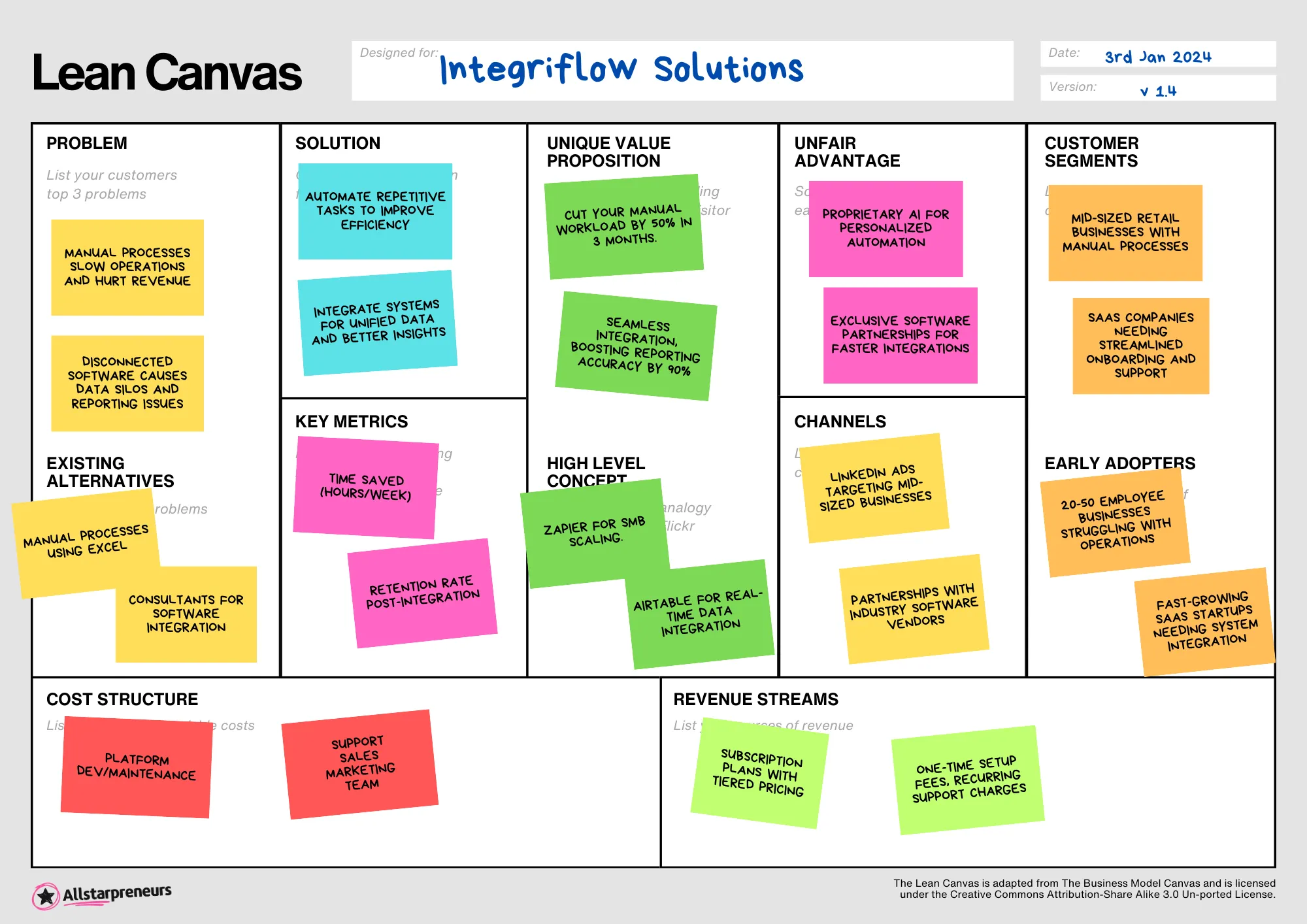
Lean Canvas: AI-Powered LED Strip Controller
Transform any cheap, ordinary LED strip into a smart, AI-driven lighting system—without paying a hefty $20/month or buying an expensive new smart LED kit.
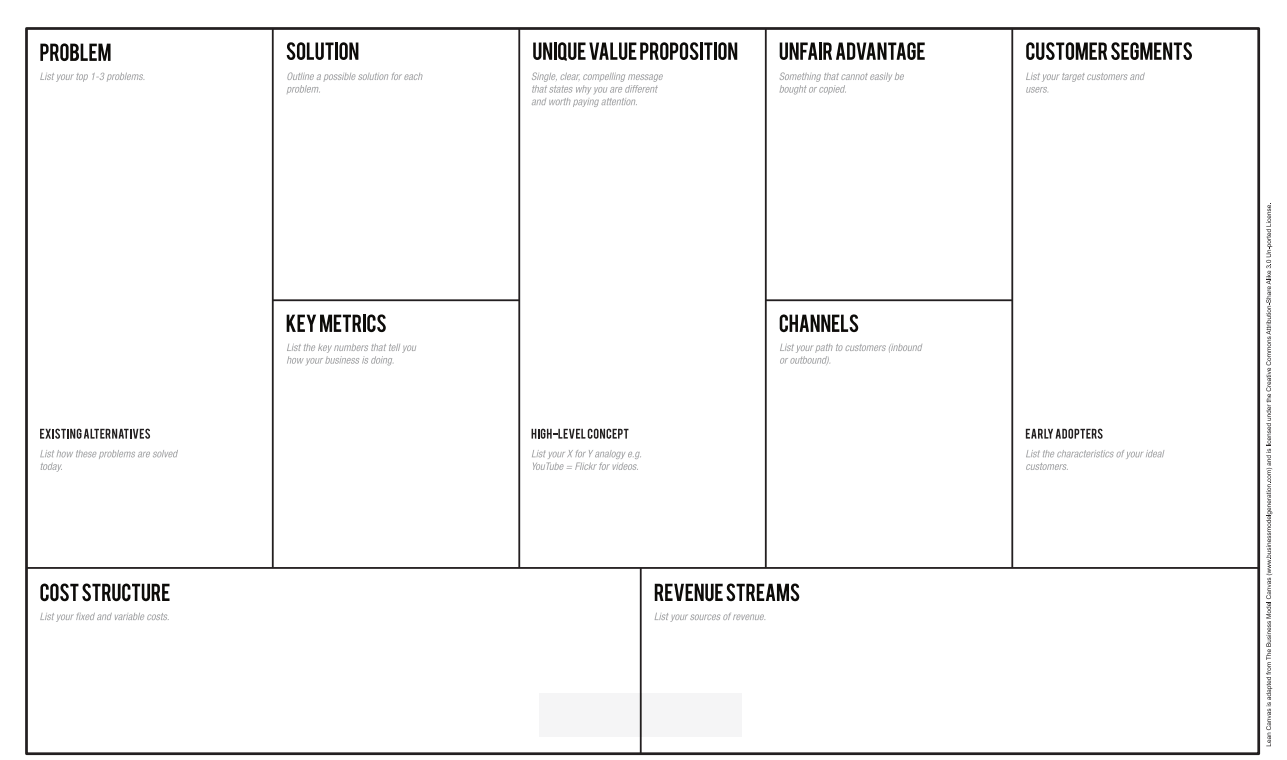
Table of Contents
- Problem
- Customer Segments
- Unique Value Proposition
- Solution
- Channels
- Revenue Streams
- Cost Structure
- Key Metrics
- Unfair Advantage
- Additional Action Items (TODO)
- Conclusion
1. Problem
- Limited Functionality & High Cost: Existing smart LED strips (e.g., Apple HomeKit-compatible) are pricey yet offer little more than voice control.
- Excessive Manual Setup: “Shortcuts” for different moods or activities must be pre-configured, which is impractical for every situation.
- Student Budget Constraints: Most college students opt for cheaper, standard LED strips (remote or Bluetooth) lacking automation or advanced features.
- Market Gap: Students (and potentially 1-person households) want affordable, adaptive, and AI-driven lighting without replacing their entire LED setup.
Existing alternative: Lepro (Smart LED strip with 20$ software subscription for AI feature)
TODO
- Conduct broader market size research beyond students.
- Run a price sensitivity survey to see what hardware + subscription fees are acceptable.
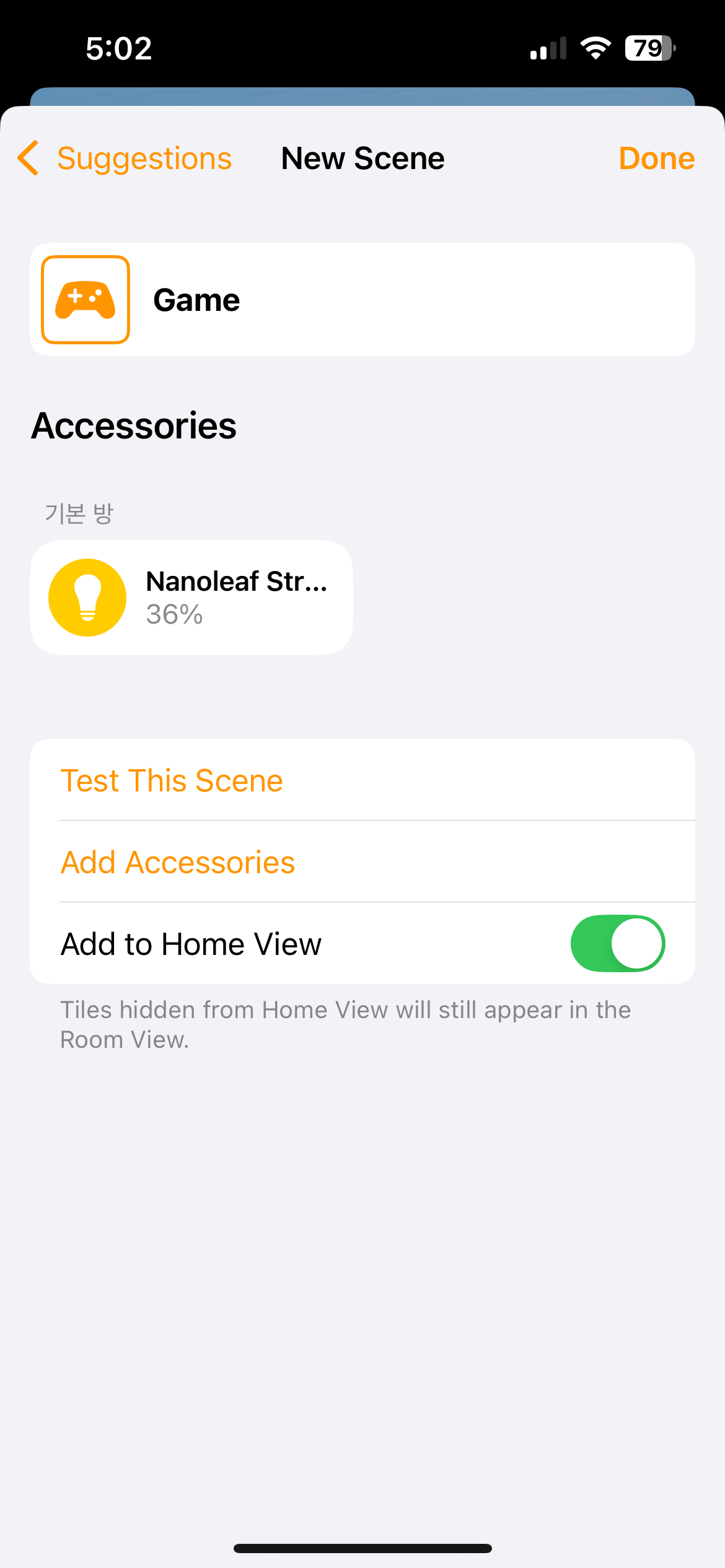 Smart Strip’s scene setting screen. For every situation, the user have to manually save a preset to use a short cut.
2. Customer Segments
- Primary: College students who already have regular LED strips or plan to buy low-cost LED strips.
- Tech-Savvy / Efficiency-Focused: Individuals interested in AI-driven convenience at a reasonable price.
- Future Expansion: 1-person households (e.g., those living in small apartments) who want affordable, smart home upgrades.
TODO
- Investigate purchasing patterns for these segments (price points, features they value most).
- Extend surveys/interviews to one-person households for potential market expansion.
3. Unique Value Proposition
Let AI Handle It: The Most Affordable & Convenient Smart LED Upgrade Kit
- “AI that automatically adjusts your normal LED strips so you don’t have to pay expensive costs—making lighting both smart and affordable.”
- Re-use Existing LED Hardware: No need to discard current strips or invest in a costly new setup.
- Simple & Adaptive: Voice-triggered AI automatically fine-tunes color and brightness based on your activities or mood.
4. Solution
-
Hardware Upgrade
- An Arduino-based device that hooks into any standard LED strip, allowing full automation.
- After initial prototypes, we will hide circuitry using affordable 3D-printed enclosures to improve user experience.
-
AI-Driven Software
- When the user says, “I’m studying,” the system analyzes the context and switches to bright, cool-toned light.
- If the user says, “Movie time,” it dims the lights to a warm ambiance.
- Over time, the AI learns personal preferences, enabling hyper-personalized recommendations.
- Voice-activated and app-controlled for easy access. (MVP will be developed in webpage form.)
5. Channels
- Campus Trials: Deploy prototypes at Denison University for quick feedback and iteration.
- Early Promotion
- Share project details on LinkedIn.
- If market potential grows, explore additional student-friendly social platforms (TikTok, school networks, etc.).
- Sales Approach
- Direct Sales initially for close feedback loops and user testimonials.
- Transition to online marketplaces (Amazon, crowdfunding) once product-market fit is validated.
6. Revenue Streams
- Hardware: Sold near cost price to encourage adoption (small margin possible to offset Free tier AI).
- Subscription (SaaS) Model (NOT FINAL)
- Free Tier: Up to 10 AI requests per month; basic scheduling.
- Plus ($3.99/month): 50 AI requests, advanced automation features.
- Pro ($5.99/month): 100 AI requests, Alexa integration, plus everything in Plus.
TODO
- Survey or beta-test to gauge feature desirability (e.g., extended AI requests, scheduling).
- Calculate AI API costs precisely to refine subscription pricing.
- Model free vs. paid user mix and potential usage spikes to ensure cost coverage.
7. Cost Structure
- Fixed Costs:
- Server, database hosting, and software maintenance.
- Initial hardware prototyping expenses (Arduino/PCB/3D printing).
- Variable Costs:
- AI API calls (OpenAI, STT services, etc.).
- Incremental hardware production as user base grows (ordering parts in bulk, assembly).
TODO
- Explore break-even points for subscription tiers vs. AI call expenses.
- Consider early small-batch manufacturing or custom assembly to handle MOQ constraints.
8. Key Metrics
- Hardware Sales: Units sold each quarter.
- Subscription Conversions: Percentage of hardware users upgrading to Plus or Pro.
- Monthly Active Users (MAU): Number of users (free + paid) actively controlling their LED strips.
- Churn Rate: Cancellation from Plus/Pro back down to Free.
- Engagement: Frequency of AI requests, user satisfaction with AI presets.
9. Unfair Advantage
- Low-Cost Entry + Existing LED Reuse: Drastically lower barrier vs. buying expensive new “smart” strips.
- Customizable & Rapid Iteration: Starting with Arduino for prototypes, then evolving to custom hardware for scalability.
- AI Personalization & Data Lock-In: Continuous learning from each user’s preferences—hyper-personalization that’s hard for big competitors to replicate without user-specific historical data.
- Campus Network & Lean Testing: Quick user feedback cycles and minimal marketing cost through direct campus demos, building strong early traction.
10. Additional Action Items (TODO)
- Market Size Exploration: Extend beyond students to 1-person households and small apartment residents.
- Price Sensitivity & MVP Surveys: Confirm hardware cost acceptance, subscription willingness to pay.
- AI Cost Analysis: Finalize “free vs. paid tier” usage limits and AI call expenses.
- Feature Prioritization: Validate additional features (scheduler, auto color transitions, etc.) via beta tests.